The Science of Real Olive Oil

The Science of Real Olive Oil

Rethink everything you knew about EVOO.

Rethink everything you knew about EVOO.

Most Americans have grown up with olive oil that is refined, blended, and stripped of the very compounds that made it legendary. This is the truth about what real EVOO is — and what it does.

Most Americans have grown up with olive oil that is refined, blended, and stripped of the very compounds that made it legendary. This is the truth about what real EVOO is — and what it does.

Further Reading ↓

What Real EVOO Is
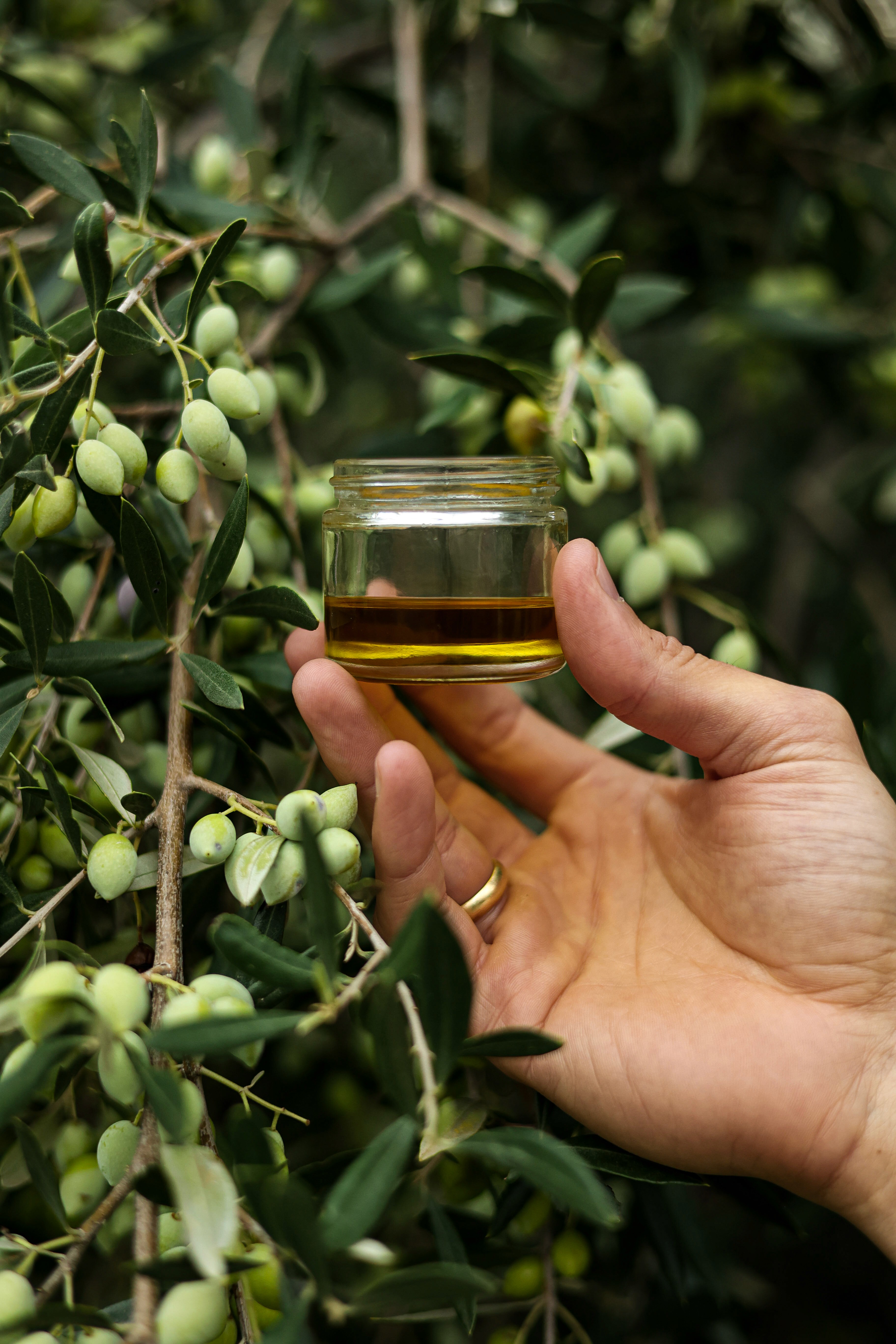
The pure juice of the olive fruit. Nothing more.

The pure juice of the olive fruit. Nothing more.

Real extra virgin olive oil is simply olive fruit juice. The olives are picked, taken immediately to a mill, and cold-pressed to extract the oil. No heat. No chemicals. No refinement.

What you get is a food that is genuinely alive — rich in polyphenols and oleocanthal, the bioactive compounds at the heart of Mediterranean health. These compounds are fragile. Heat destroys them. Time degrades them. Refinement strips them entirely.

Many bottles labeled "extra virgin" on grocery store shelves are blended across countries, stored for months in plastic, exposed to light, and without temperature control. By the time they reach you, the polyphenols have degraded, the oleocanthal has faded, and the flavor is gone. What you're left with is a pale imitation.

Polyphenols

The compounds that made the Mediterranean diet famous.

The compounds that made the Mediterranean diet famous.

Polyphenols are bioactive micronutrients produced naturally by plants — as pigments to attract pollinators, antioxidants to absorb UV radiation, and chemical defenses against pathogens and predators. Where our grove sits, nine months of unbroken sun, sea mist from the water, and the coastal sandy soil naturally intensify polyphenol production in the Koroneiki olive. When you eat them, that protective chemistry transfers to you. EVOO's polyphenols are secoiridoids — oleocanthal and oleacein — a class found in no other food in meaningful quantities, with documented anti-inflammatory and neuroprotective mechanisms. Most bottles labeled "extra virgin" on grocery store shelves contain fewer than 100 mg/kg. Our 2025 harvest contains 578.

Polyphenols are bioactive micronutrients produced naturally by plants — as pigments to attract pollinators, antioxidants to absorb UV radiation, and chemical defenses against pathogens and predators.

Where our grove sits, nine months of unbroken sun, sea mist from the water, and the coastal sandy soil naturally intensify polyphenol production in the Koroneiki olive. When you eat them, that protective chemistry transfers to you.

EVOO’s polyphenols are secoiridoids — oleocanthal and oleacein — a class found in no other food in meaningful quantities, with documented anti-inflammatory and neuroprotective mechanisms. Most bottles labeled “extra virgin” on grocery store shelves contain fewer than 100 mg/kg. Our 2025 harvest contains 578.

578

578

mg/kg Polyphenols

6× the standard grocery EVOO. The EU high-polyphenol health claim threshold is 250 mg/kg. Our 2025 harvest more than doubles it. Verified by the World Olive Center for Health.

6× the standard grocery EVOO. The EU high-polyphenol health claim threshold is 250 mg/kg. Our 2025 harvest more than doubles it. Verified by the World Olive Center for Health.

308

308

mg/kg Oleocanthal

The first key secoiridoid, and the primary source of EVOO's anti-inflammatory properties. Inhibits the same COX enzymes as ibuprofen — found only in genuine EVOO.

The first key secoiridoid, and the primary source of EVOO's anti-inflammatory properties. Inhibits the same COX enzymes as ibuprofen — found only in genuine EVOO.

137

137

mg/kg Oleacein

The second key secoiridoid. Cardioprotective and neuroprotective — linked to reduced LDL oxidation and neurodegenerative plaque clearance. Average EVOO contains 105 mg/kg. Ours has 137.

The second key secoiridoid. Cardioprotective and neuroprotective — linked to reduced LDL oxidation and neurodegenerative plaque clearance. Average EVOO contains 105 mg/kg. Ours has 137.

Hydroxytyrosol

Hydroxytyrosol

Key Derivative

At 20g daily (about 1.5 tbsp), Kalléa delivers 11.56mg of hydroxytyrosol derivatives — more than double the EU threshold (Regulation 432/2012) for blood lipid protection.

At 20g daily (about 1.5 tbsp), Kalléa delivers 11.56mg of hydroxytyrosol derivatives — more than double the EU threshold (Regulation 432/2012) for blood lipid protection.

Oleocanthal — Nature's Anti-Inflammatory

Oleocanthal — Nature’s Anti-Inflammatory

That peppery burn?
It's not a flaw. It's the point.

That peppery burn?
It’s not a flaw. It’s the point.

Oleocanthal is a secoiridoid phenolic compound found only in genuine extra virgin olive oil. It inhibits COX-1 and COX-2 enzymes — the same targets as ibuprofen — producing a measurable anti-inflammatory effect (Beauchamp et al., Nature, 2005). Unlike NSAIDs taken acutely, oleocanthal consumed daily through diet addresses chronic low-grade inflammation, the kind increasingly linked to cardiovascular disease, neurodegeneration, and accelerated aging.

Research published in ACS Chemical Neuroscience (Abuznait et al., 2013) found that oleocanthal promotes the clearance of amyloid-beta plaques and tau proteins from the brain — both hallmarks of Alzheimer's disease. Regular oleocanthal exposure enhanced the brain's own waste-clearance mechanisms, offering a plausible dietary pathway for neuroprotection.

Our 2025 harvest contains 308 mg/kg. Most grocery store oils contain none. The stronger the burn in the back of your throat, the higher the oleocanthal. It means the oil is fresh, unrefined, and working exactly as it should.

Cooking With EVOO

Real EVOO doesn't just survive heat.
It thrives in it.

High-quality EVOO is one of the most stable cooking oils you can use. Our ancestors proved it for thousands of years over open fire — and modern science backs them up.

The idea that you can't cook with EVOO was never about safety — it was a myth spread by vegetable oil companies who profited from you reaching for a “neutral” oil instead. People confuse cheap, mass-produced olive oil with genuine extra virgin. They are not the same product.

“Stop saving it for drizzling. Cook like the Mediterraneans.”

Kalléa

Genuine extra virgin olive oil is naturally rich in polyphenols and oleic acid, both of which make it remarkably heat-stable. Its smoke point reaches 400–410°F, covering everyday sautéing, roasting, and pan-searing with ease. More importantly, unlike seed oils, it doesn't oxidize and break down at cooking temperatures. It stays clean, stable, and nourishing from pan to plate.

Kalléa Smoke Point: 400–410°FKalléa handles any cooking method with ease.
Cooking MethodTemp RangeEVOO Safe
Sauté325–375°F
Pan Fry325–375°F
Bake350–425°F
Roast375–425°F
Pan Sear380–400°F

Oxidative Stability (hrs)

Resistance to breakdown under heat

Other oils, and especially seed oils, break down under heat, releasing harmful compounds. Thanks to its monounsaturated fat profile and high polyphenol content, EVOO doesn't.

The nuance worth knowing
Stability

Kalléa's 578 mg/kg polyphenols make it more oxidatively stable than most seed oils — even through brief temperature spikes.

Temperature

Oven air temp ≠ oil temp. Even when the oven is set to 425°F, food with moisture never reaches that temperature — which means the oil itself is almost always operating well within its safe range.

Technique

We often add oil too early and cook hotter than needed. Add your food and EVOO together, and it will perform perfectly.

How We Were Taught

We were told to use a light hand with olive oil. That advice was built around inferior products. Cook with Kalléa generously, confidently, and often.

Common Questions

What people ask us most.

Because real single-estate, early-harvest, cold-pressed EVOO with verified polyphenol content at this level is rare. The alternative costs less because it is less — farmed later in the season, when the olives are ripe and yield more juice, driving quality, and price, down. Kalléa is priced honestly for what it actually is.

Kalléa is derived from the Greek words Kalí (beautiful) and Elaía (olive). It is the beautiful olive, a fitting name for a brand that reveres the craft, and for an elegant extra virgin oil.

Yes — and noticeably. Expect aromas of green grass, fresh green olive, banana, and almond. On the palate: abundant fruitiness, green tomato, artichoke, and a clean sweetness, with a persistent peppery finish at the back of the throat.

It's one of the best. Kalléa arrives in a beautifully designed ivory bottle and elegant box that needs no gift wrapping to make an impression. It's the perfect gift, since it's something people will actually use every day. It is for hosts, food lovers, health-conscious friends, and anyone who appreciates something real.

100% extra virgin olive oil from the Koroneiki varietal. That's it. No blends, no additives, no refinement.

Yes. We want you to love Kalléa. If you're not satisfied for any reason — you don't love the taste, it didn't meet your expectations, anything — contact us within 90 days of delivery and we'll make it right.

Up to 24 months unopened in ideal conditions. We recommend using within 12–18 months of harvest. Once opened, use within 2–3 months.

Keep away from light and heat — both degrade polyphenols. A cool, dark cupboard is ideal. Never refrigerate.

The grove is farmed without pesticides or synthetic fertilizers — only what the land and season naturally provide. It sits within a Natura 2000 EU-protected ecological zone, which legally shields it from environmental contaminants. Formal organic certification is in progress.

Every bottle carries the harvest date. We don't blend across harvests or warehouse indefinitely. When the current harvest is gone, it's gone — and we'll tell you exactly when the next one arrives.

We double-package every order carefully, but we ship in glass and transit happens. If anything arrives damaged, email us at hello@kallea.com with your order number and a photo, and we'll send a replacement immediately.

At this time, we ship within the United States only.

The Science, Sourced

Peer-reviewed. Independently published.

Nature, 2005 — Beauchamp et al., Monell Chemical Senses Center

Ibuprofen-like activity in extra-virgin olive oil

The landmark study identifying oleocanthal as a natural COX-1 and COX-2 inhibitor — the same enzymes targeted by ibuprofen. Established the pharmacological basis for the anti-inflammatory properties of fresh, high-quality EVOO.

Read →

ACS Chemical Neuroscience, 2013 — Abuznait et al., University of Louisiana

Oleocanthal-rich olive oil promotes the clearance of amyloid-beta and tau in the brain

Found that oleocanthal promotes clearance of amyloid-beta plaques and tau proteins from the brain — both hallmarks of Alzheimer's disease — by enhancing the brain's own waste-clearance mechanisms. Offers a plausible dietary pathway for neuroprotection.

Read →

New England Journal of Medicine, 2013 — PREDIMED Study Investigators

Primary Prevention of Cardiovascular Disease with a Mediterranean Diet

Randomized trial of 7,447 participants showing a Mediterranean diet supplemented with extra-virgin olive oil reduced major cardiovascular events by ~30% and stroke risk by ~50% versus a low-fat control diet. One of the largest dietary intervention trials ever conducted.

Read →

BMC Medicine, 2014 — Guasch-Ferré et al., Harvard T.H. Chan School of Public Health

Olive oil intake and risk of cardiovascular disease and mortality in the PREDIMED Study

7,216 participants over 4.8 years. Those consuming the most extra-virgin olive oil had a 35% lower risk of cardiovascular events and cardiovascular mortality — isolating EVOO specifically, not just the Mediterranean diet as a whole.

Read →

BMC Medicine, 2014 — Tresserra-Rimbau et al., University of Barcelona & Harvard

Polyphenol intake and mortality risk: a re-analysis of the PREDIMED trial

Re-analysis of the PREDIMED cohort found that higher total polyphenol intake was inversely associated with all-cause mortality. Directly supports the case that polyphenol concentration — the number on Kalléa's COA — is the meaningful variable for longevity outcomes.

Read →

Journal of the American College of Cardiology, 2022 — Harvard T.H. Chan School of Public Health

Consumption of Olive Oil and Risk of Total and Cause-Specific Mortality Among U.S. Adults

28-year observational study of 92,383 Americans found that consuming more than half a tablespoon of olive oil daily was linked to 19% lower total mortality, 29% lower neurodegenerative mortality, 19% lower cardiovascular mortality, and 17% lower cancer mortality.

Read →

Six thousand years of wisdom. In a bottle.

Six thousand years of wisdom. In a bottle.

Now you know what real EVOO is. Time to taste it.

KALLEA, LLC. All rights reserved.